FIELD OF INTERVENTION: Socio-economic Development
GEOGRAPHICAL AREA: Latin America, Argentina, Gran Buenos Aires
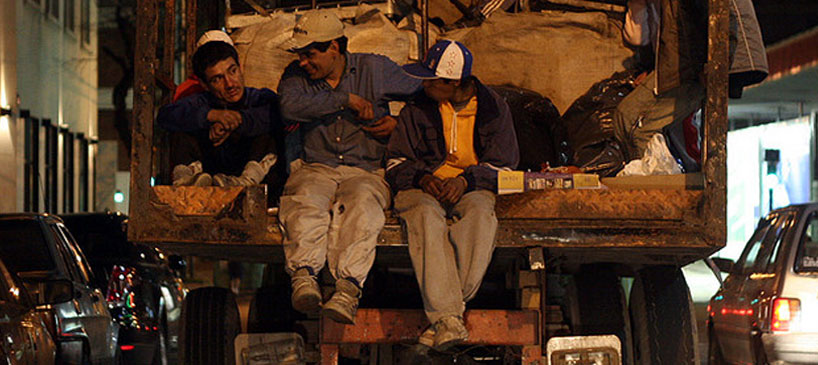
SHORT DESCRIPTION OF THE PROJECT: The project aims to create and consolidate collective organization through cooperatives of recyclers, allowing and promoting formal employment, interpersonal and institutional relations, construction of new social bonds between members of cooperative units, improvement of working and social conditions for cartoneros, also throughan increase of their earned income. The possibility to make a qualitative leap in the sector, through the creation of workers’ cooperatives, can be an opportunity to formalize many of the activities that collectors are currently carrying out, providing them with the opportunity to consolidate over time these micro-entrepreneurial initiatives related to waste recovery. The strengthening of cooperatives does not suffice, however, to solve all the issues; it is necessary to ensure a high level of representativity to contrast intermediaries and allow to join forces. Lastly, it is necessary to focus on a close connection between the network of cooperatives and those municipalities responsible for waste collection and on the achievement of international waste recycling quotas deemed to be essential. The involvement in the remuneration of cooperatives’ work, at least until the end of the project, of those responsible for waste production, is essential to ensure a future continuity and a further development for those activities carried out by the beneficiaries of the project.
OBJECTIVES: ● Contribute to the fight against poverty and to social inclusion of those categories which have been most severely affected by the Argentinian crisis. ● Strengthen and organize cartoneros’ associative fabric, with the aim of promoting the creation of economically active cooperatives which could officially enter the waste sorting and recycling circuit, through the strengthening of management, associative, technical and production capacities. ● Promote a greater involvement of the beneficiaries in the recycling stage rather than in the collection, considering that recycling is the activity creating added value, new production chains (clusters) and, thereby, higher incomes. ● Support recyclers’ inclusion in a network of formal work, with the objective of combating job insecurity and increasing income. ● Support actions and initiatives aiming at integrating the project’s beneficiaries into collection and recycling systems promoted by local authorities.
ACTIVITIES:
- Purchase, installation and activation of machineries for the creation of added value for a part of the waste produced in the municipalities.
- Technical assistance for the correct use and maintenance of machineries; collaboration with enterprises and/or universities for knowledge transfer on new technologies regarding classification, transformation and creation of added value of recycled material.
- Definition of administrative mechanisms and organization of work among cooperatives and pre-cooperatives, through work regulations drafting. Business plans will be developed, aiming at the functioning of entrepreneurial activity chain needed for consolidating networks and creating added value for recycled products, to obtain increased income and employment opportunities.
- Technical, legal and accounting assistance to the cooperatives, for their formalization and legalization.
- Provision of protection tools for waste collection and recycling.
- Management and institutional know-how transfer and creation of networks of relations between the public system and the waste sorting system.
- Selection and training course for trainers, who will eventually be responsible for training the project’s beneficiaries.
- Selection and training of socio-cultural workers, who will be responsible for accompanying in the cooperatives and pre-cooperatives management.
- Training of executives: course designed for a selected group of leaders for each cooperative and pre-cooperative targeted by the project. The trainers and the socio-cultural workers will be responsible for the program.
- Training course on Cooperativism and Associationism.
- Training courses on technical and production subjects, business management, marketing techniques, home waste sorting, improvement of cooperativism.
- Regional meetings for exchange of experiences.
- Visits to cooperatives: socio-cultural workers will be in charge of monitoring, facilitating beneficiaries’ learning on technical, production, associative and managerial issues.
- Organization of meetings for a Coordination Table in Rosario, with the participation of the cooperatives’ leaders, the area managers from the municipalities and the project co-management. The meetings will concern institutional relations between various actors and will be intended for monitoring activities regarding technical, production and economic issues, facilitating the development of common proposals for the implementation of more effective waste collection and recycling systems.
- Creation of a database for cooperatives and cooperative units, aiming at the integration and systematization of all information regarding the cooperatives.
- Optimization of recycling storages in Coronel Bogado and Firmat.
- Activation of the recycling facility in the municipality of Rosario.
RESULTS:
- Cooperatives recognized and economically active, created and developed.
- Increased collecting and recycling capacity, improved hygiene working conditions, increased income, improved technical-organizational and cooperative knowledge, needed for the sustainability of the system, for 660 members.
- Intermunicipal network of cooperatives, strengthened.
- Existing warehouses improved and 2 new recycling plants put in operation.
- Experiences in the cartoneros sector, systematized; training and audiovisual material, created.
PARTNERSHIP: Lead applicant: Progetto Sud. Partner: IMFC (Instituto Movilizador de Fondos Cooperativos).
TIME PERIOD/DURATION: start date 25/02/2008 (3 years).
DONOR: Ministry for Foreign Affairs